
Top Signs You Need Chimney Cleaning Service – Don’t Ignore These
A slow-starting fire isn’t a kindling problem. A smoky smell on a cold morning isn’t a drafting quirk. Both are your chimney telling you something specific about what’s built up inside the flue. Most homeowners wait for smoke in the room or a visible creosote stain before they call, but the symptoms that matter most show up earlier and quieter. Here’s what to watch for, what each sign means mechanically, and when it’s time to have the system looked at by someone qualified. If you’d rather not guess, call (877) 820-8736.
What are the most common signs you need chimney cleaning?
The clearest signs are a fire that struggles to catch, smoke spilling into the room instead of rising, a strong oily or tar-like smell, black flakes on the firebox floor, and a flue that feels rough or crusty when you look up it. Each of these traces back to restricted airflow or accumulated creosote, not to the wood you’re burning or the weather outside.
Here’s how we break them down for Morningside homeowners:
- Lazy, smoldering flame: not enough draft pulling air through the firebox. Restricted flue means the fire starves for oxygen and smolders, which produces more creosote, which restricts the flue further. It’s a loop.
- Smoke rolling into the room: the flue can’t move the volume of smoke the fire is producing. Blockage, buildup, or a failing liner are the usual causes.
- Oily, acrid smell on mild days: creosote off-gassing. You’ll notice it most when the fire is out and the house is warm.
- Black flakes or gritty debris on the firebox floor: glazed creosote flaking off the flue walls above.
- Rough interior texture when you look up: a clean flue should feel smooth. Grit means buildup.
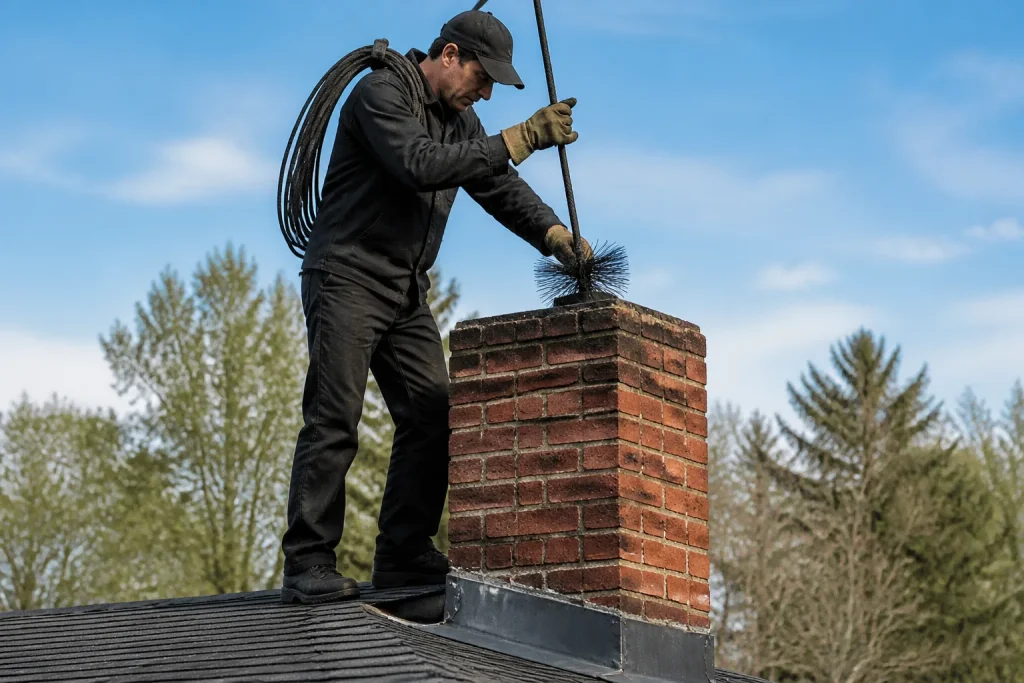
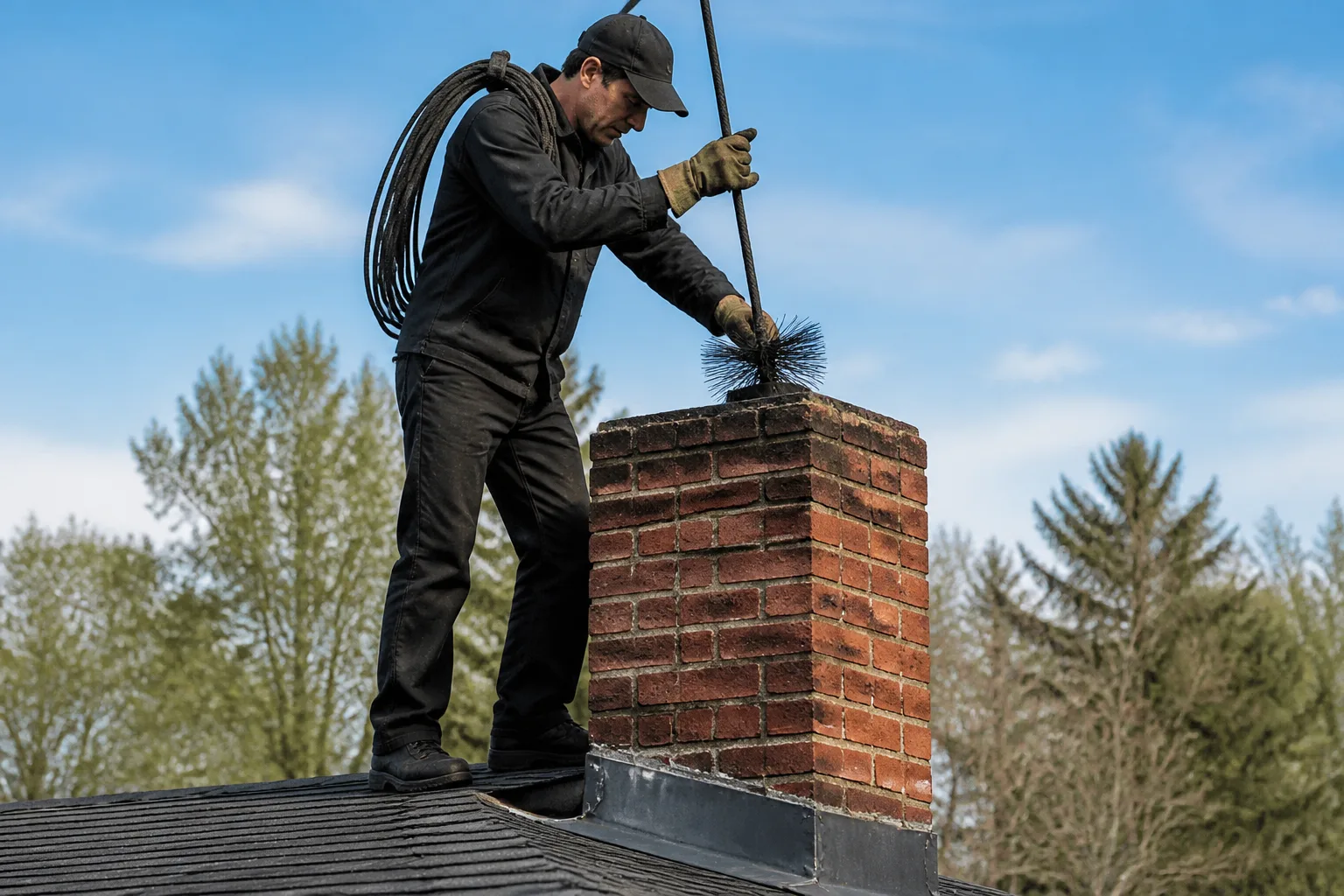
None of these require you to climb a roof or reach into the flue. You’re reading symptoms from the living room. The diagnosis happens at the chimney itself, and that’s what a professional chimney sweep is for. We document what we find before we recommend anything.
What’s actually happening inside the flue when your fire won’t draw?
When a fire won’t draw, the flue has lost cross-sectional area to creosote, soot, or debris. Smoke needs a clear column of rising hot gas to carry it out. Anything narrowing that column reduces draft, and reduced draft means incomplete combustion, which generates more creosote. The fire isn’t broken. The pathway is.
Morningside sits in a part of Georgia with a long shoulder season. Mild days followed by cold nights mean fires get lit and then damped down for the evening. Damping a fire starves it of oxygen and produces exactly the conditions that build creosote fastest. A chimney that drafts well in January can be noticeably restricted by March, and a homeowner won’t necessarily feel it until the next season’s first fire.
Three things typically cause the draw problem:
- Creosote accumulation on the flue walls, narrowing the passage.
- Soot and ash buildup at the smoke shelf or in the flue, restricting flow.
- Physical obstruction – nesting material, a failed damper, or a damaged liner that’s collapsed inward.
The first two respond to cleaning. The third is a repair question, and it’s the reason a sweep and an inspection belong together rather than six months apart.
How do the three stages of creosote change what needs to happen?
Creosote has three stages, and they’re not the same problem at different intensities. Stage 1 is soot and light flaky deposit that brushes off with a standard sweep. Stage 2 is a denser, crusty layer that bonds to the flue wall and needs more aggressive mechanical removal. Stage 3 is glazed, hardened creosote that has essentially fused to the liner, and it’s the stage most associated with chimney fires.
Which stage you’re likely looking at lines up with the symptoms:
- Stage 1: mild smell, light dust, fire still drawing reasonably well. Routine cleaning handles it.
- Stage 2: lazy fire, noticeable smell, flaking debris, restricted draw. Cleaning is more involved, and the flue needs to be checked for damage underneath.
- Stage 3: hard glossy residue, smoke problems, and a real fire risk. This is where a standard brush sweep may not be enough, and the liner condition becomes the deciding factor.
Most homeowners have never been told that Stage 2 and Stage 3 are different problems with different solutions. Stage 3 work sometimes calls for liner restoration rather than simple cleaning, which is where HeatShield comes in – a restoration system that addresses a deteriorating flue without a full rebuild. That’s a conversation to have with someone who can show you the camera footage, not someone guessing from the ground.
Why can a chimney look fine and still have dangerous buildup?
A chimney can draw well with no smoke in the room and still carry dangerous buildup, because visible smoke is only the symptom of severe restriction. A flue operating at seventy percent of its capacity looks fine from the living room. The camera sees what the room can’t.
This is the false negative that catches careful homeowners. You did everything right: you burn seasoned wood, you open the damper, your fire draws. And underneath, the liner has a hairline crack in a section you’ll never see, or mortar joints have started to deteriorate behind the flue tile. Our technicians have up to 13 years of experience, and one of the things that experience teaches is that a clean-looking fire and a sound flue are two different questions.
During a cleaning and inspection, we regularly find things the homeowner could neither see nor smell:
- Hairline cracks in the liner, invisible from the firebox.
- Deteriorated mortar joints between flue tiles.
- Animal nesting material lodged above the damper.
- Evidence of moisture intrusion, often at the crown.
- Displaced or collapsed liner sections behind a working fireplace.
None of these announce themselves. All of them matter. It’s why an inspection is a standalone, billed service and not a free add-on; the work of looking properly takes time. If a cap or crown issue turns up, that’s our chimney cap & crown work, and if the firebox itself needs attention, that’s fireplace repair.
What’s the seasonal timing mistake most homeowners make?
The most common timing mistake is waiting for the first genuinely cold stretch to think about the chimney. That’s when appointment calendars are fullest and when a discovered problem has no time to be solved before the fire you wanted. Schedule it in early fall, before the first cold snap, and you have room to deal with whatever turns up.
Why early fall? Two reasons.
First, a discovered issue is only a problem if you discover it on the night you wanted a fire. Found in September, a liner crack is a scheduled repair. Found in the cold, it’s a cold house. Second, cleaning and inspection are calmer work when the system has sat unused for a season. There’s no half-burned log to work around, and the findings are easier to read.
Morningside’s burn season is long enough that a chimney used through the cold months accumulates meaningful creosote by spring. A late-spring or early-fall cleaning catches that buildup before it has a chance to matter. Waiting until the first cold Friday to call is how problems get expensive.
When should you call a professional instead of waiting?
Call when you have smoke in the room, a persistent oily smell, a fire that won’t draw, or any visible cracking around the firebox or crown. Those are signs the system needs a look, not a theory. A trained professional should assess anything involving the liner, the flue interior, or the crown, because the risks there are real and the diagnosis depends on a camera inspection you can see for yourself.
A few situations should move straight to a call:
- You’ve had a chimney fire, even a small one you put out yourself. The liner may be compromised.
- You smell gas or notice soot falling into the firebox.
- The firebox or hearth shows cracked masonry.
- You can’t remember the last time the chimney was cleaned.
Creosote fires and carbon monoxide are the reasons this work matters, not scare tactics. A clean, sound flue moves smoke and gas out of the house as designed. A compromised one doesn’t. We’d rather tell you the chimney can safely wait another season than sell you work it doesn’t need – and we’ll show you the camera evidence either way. Nothing is recommended without it.
Related services in Morningside
Full-system care from the crown to the firebox means one company handles the sweep, the inspection, and the repair. We work with professional-grade materials including Gelco, Olympia Chimney, Famco, and Copperfield components for caps, crowns, and dampers, and DuraFlex flexible liner systems where a reline is the right answer. Chimney Sweep Morningside covers all five service categories so you’re not coordinating between a sweep, an inspector, and a mason for one project.
What happens when you call
- 1
A real person answersNo phone trees – you reach a local pro.
- 2
You get an upfront price rangeHonest numbers before anyone is dispatched.
- 3
A background-checked tech heads outLicensed & insured, dispatched right away.
- 4
You approve before work beginsNothing starts until you say go.
The Bottom Line
The signs that matter show up before the dramatic ones. A lazy fire, an oily smell, black debris on the firebox floor – each points to a specific mechanical condition inside the flue, and each is easier and cheaper to address early than late. Don’t wait for smoke in the room. Don’t assume a chimney that draws is a chimney that’s sound. Get it looked at with a camera, get the findings documented, and make the repair decision with evidence in front of you rather than someone’s guess.
If you’re in Morningside and need help, Chimney Sweep Morningside offers free estimates. Call (877) 820-8736. We answer 24/7. Fast dispatch from 7am to 7pm, Sunday through Friday.
Frequently Asked Questions
Most wood-burning chimneys need cleaning once a year, or sooner if you burn heavily or notice the signs above. Gas fireplaces still need an annual inspection even though they produce far less creosote. The right interval depends on how much you burn and what the camera finds. Call (877) 820-8736 for an exact quote – estimates are free.
Yes. The symptoms in this article – lazy fire, smoke in the room, oily smell, black flakes – are all readable from inside the house. What you can’t see from the living room is the liner condition, which is why a camera inspection matters. Call (877) 820-8736 to book one.
Creosote keeps accumulating, and at Stage 3 it becomes fuel for a chimney fire. Reduced draft also means smoke and carbon monoxide have a harder time leaving the house. Skipping cleaning doesn’t create an immediate emergency, but it removes your margin for error. Call (877) 820-8736 before the margin gets thin.
No. We’re closed Saturday and open Sunday through Friday, 7am to 7pm. We answer the phone 24/7, and a call outside dispatch hours is booked into the next opening. Call (877) 820-8736.
Written by the team at Chimney Sweep Morningside.
Need Chimney Cleaning Help?
Call Chimney Sweep Morningside - the local pro we connect you with is licensed and insured, with free written estimates in Morningside.
(877) 820-8736